Buy mapline.eu ?
We are moving the project
mapline.eu .
Are you interested in purchasing the domain
mapline.eu ?
domain@kv-gmbh.de · 0541-91531010
Buy mapline.eu ?
What is the quantifier notation?
Quantifier notation is a way of representing statements in logic using symbols to indicate universal and existential quantifiers. The universal quantifier (∀) is used to indicate that a statement is true for all elements in a set, while the existential quantifier (∃) is used to indicate that a statement is true for at least one element in a set. For example, the statement "For all x, P(x)" can be represented as "∀x P(x)" using quantifier notation. This notation is commonly used in mathematics and computer science to express logical statements concisely and precisely. **
What is a quantifier in language?
A quantifier in language is a word or phrase that indicates the quantity or extent of something. Examples of quantifiers include words like "all," "some," "many," "few," "several," "most," and "none." Quantifiers are used to specify the amount or number of items being referred to in a sentence, and they help to convey the scope or scale of a statement. In English, quantifiers are often used in combination with nouns to provide more specific information about the quantity of the objects being discussed. **
Similar search terms for Quantifier
Top-Angebote
Products related to Quantifier:
-
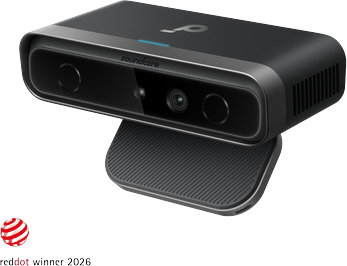
soundcore Nebula SpaceFlow AI Mapping Projection Accessory for Nebula X1 Pro & X1AI-Powered 3D Mapping, No Expertise Needed: SpaceFlow transforms your Nebula X1 Pro or X1 into a full AI mapping system—precision camera hardware and spatial recognition algorithms automatically build an accurate 3D model of your wall in minutes, fitting every animation perfectly to any surface shape or angle, without professional modeling Nebula Space — AI-Powered Creator Platform:The ultimate creative tool is your imagination. Simply describe any scene — a starfield, a forest at dawn, a futuristic city — and AI instantly transforms your words into a stunning 3D projection on your wall. Text-to-scene. Zero learning curve. Infinite possibilities 100+ Ready-to-Use Templates for Every Holiday and Occasion: Browse an ever-growing official library of professionally designed templates in the Nebula Connect app — covering holidays, celebrations, and everyday ambience, each paired with matching themed audio Free Mode or AI Fusion Mode — You Choose: Masking Templates are free and project within an auto-scanned boundary. AI Fusion Templates use Sparks to let AI analyze your wall's shape and texture—generating content that naturally blends into every surface detail Set Up in Minutes, Not Weeks: Traditional 3D mapping requires 16+ days of specialist work. SpaceFlow completes the entire process in under 10 minutes—no specialist software, extra equipment, or technical expertise required Designed for Nebula X1 Pro & X1: SpaceFlow is an AI mapping accessory exclusively compatible with Nebula X1 Pro and Nebula X1 projectors—not a standalone projector. More compatible models coming soon Update Firmware for the Best Experience: Before first use, update to the latest firmware for optimal performance and the newest AI mapping features. Go to Settings > Firmware Version > Update in the Nebula Connect app799,00 £*Shipping: 0,00 £Secure redirect to the provider

-
What is spatial visualization ability?
Spatial visualization ability refers to the capacity to mentally manipulate and comprehend spatial relationships between objects. Individuals with strong spatial visualization skills can easily visualize and understand how objects relate to each other in space, such as rotating or manipulating shapes in their mind. This ability is crucial in various fields such as engineering, architecture, and mathematics, as it allows individuals to solve complex problems and understand spatial concepts more effectively. Improving spatial visualization ability can enhance problem-solving skills and overall cognitive performance. **
-
Is spatial visualization important for engineers?
Yes, spatial visualization is important for engineers as it allows them to mentally manipulate and understand complex 3D objects and structures. Engineers often need to design and analyze various components and systems, and spatial visualization skills help them to conceptualize and communicate their ideas effectively. Whether it's designing a new product, creating blueprints for a building, or solving complex problems, spatial visualization is a crucial skill that allows engineers to think critically and innovate in their field. **
-
What are problems with spatial visualization skills?
Some problems with spatial visualization skills include difficulty in understanding and interpreting maps, graphs, and diagrams. Individuals with poor spatial visualization skills may struggle with tasks such as navigating through unfamiliar environments, understanding 3D objects, and mentally rotating objects. This can impact their performance in subjects such as math, science, and engineering, as well as in everyday activities such as driving and assembling furniture. Additionally, poor spatial visualization skills can lead to frustration and decreased confidence in one's abilities. **
-
Can one improve their spatial visualization skills?
Yes, it is possible to improve spatial visualization skills through practice and training. Engaging in activities such as puzzles, building models, and playing spatial reasoning games can help develop these skills. Additionally, practicing mental rotation exercises and regularly challenging oneself with spatial tasks can also contribute to improvement. With consistent effort and dedication, individuals can enhance their spatial visualization abilities over time. **
Why do many people feel so triggered when a universal quantifier is used?
Many people may feel triggered when a universal quantifier is used because it can come across as making sweeping generalizations that may not accurately represent everyone or every situation. This can lead to feelings of exclusion, invalidation, or oversimplification of complex issues. Additionally, universal quantifiers can sometimes be used in a way that perpetuates stereotypes or biases, further contributing to negative reactions from individuals who feel marginalized or misrepresented. **
Why do many people feel so triggered when someone uses a universal quantifier?
Many people feel triggered when someone uses a universal quantifier because it can come across as dismissive or invalidating of their individual experiences. Universal quantifiers such as "always," "never," or "everyone" can make sweeping generalizations that overlook the nuances and complexities of individual situations. This can make people feel like their unique experiences and perspectives are being overlooked or minimized. Additionally, universal quantifiers can contribute to a sense of pressure or expectation, as they imply that there is only one way to experience or interpret a situation. **
Top-Angebote
Products related to Quantifier:
-
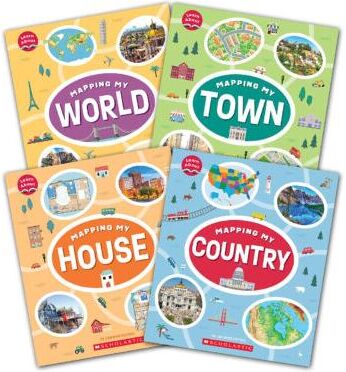
Learn About: Mapping Value Pack (paperback) - by Jeanette FerraraStarting from their bedroom, and moving to their home, street, neighborhood, town, state, country, continent, and finally, planet, children will gain a whole new understanding of their place in the world with this engaging picture book series. With...23,76 $*Shipping: 0,00 $Secure redirect to the provider
-
soundcore Nebula SpaceFlow AI Mapping Projection Accessory for Nebula X1 Pro & X1AI-Powered 3D Mapping, No Expertise Needed: SpaceFlow transforms your Nebula X1 Pro or X1 into a full AI mapping system—precision camera hardware and spatial recognition algorithms automatically build an accurate 3D model of your wall in minutes,...799,00 $*Shipping: 0,00 $Secure redirect to the provider
-
soundcore Nebula SpaceFlow AI Mapping Projection Accessory for Nebula X1 Pro & X1AI-Powered 3D Mapping, No Expertise Needed: SpaceFlow transforms your Nebula X1 Pro or X1 into a full AI mapping system—precision camera hardware and spatial recognition algorithms automatically build an accurate 3D model of your wall in minutes, fitting every animation perfectly to any surface shape or angle, without professional modeling Nebula Space — AI-Powered Creator Platform:The ultimate creative tool is your imagination. Simply describe any scene — a starfield, a forest at dawn, a futuristic city — and AI instantly transforms your words into a stunning 3D projection on your wall. Text-to-scene. Zero learning curve. Infinite possibilities 100+ Ready-to-Use Templates for Every Holiday and Occasion: Browse an ever-growing official library of professionally designed templates in the Nebula Connect app — covering holidays, celebrations, and everyday ambience, each paired with matching themed audio Free Mode or AI Fusion Mode — You Choose: Masking Templates are free and project within an auto-scanned boundary. AI Fusion Templates use Sparks to let AI analyze your wall's shape and texture—generating content that naturally blends into every surface detail Set Up in Minutes, Not Weeks: Traditional 3D mapping requires 16+ days of specialist work. SpaceFlow completes the entire process in under 10 minutes—no specialist software, extra equipment, or technical expertise required Designed for Nebula X1 Pro & X1: SpaceFlow is an AI mapping accessory exclusively compatible with Nebula X1 Pro and Nebula X1 projectors—not a standalone projector. More compatible models coming soon Update Firmware for the Best Experience: Before first use, update to the latest firmware for optimal performance and the newest AI mapping features. Go to Settings > Firmware Version > Update in the Nebula Connect app799,00 £*Shipping: 0,00 £Secure redirect to the provider
-
What is the quantifier notation?
Quantifier notation is a way of representing statements in logic using symbols to indicate universal and existential quantifiers. The universal quantifier (∀) is used to indicate that a statement is true for all elements in a set, while the existential quantifier (∃) is used to indicate that a statement is true for at least one element in a set. For example, the statement "For all x, P(x)" can be represented as "∀x P(x)" using quantifier notation. This notation is commonly used in mathematics and computer science to express logical statements concisely and precisely. **
-
What is a quantifier in language?
A quantifier in language is a word or phrase that indicates the quantity or extent of something. Examples of quantifiers include words like "all," "some," "many," "few," "several," "most," and "none." Quantifiers are used to specify the amount or number of items being referred to in a sentence, and they help to convey the scope or scale of a statement. In English, quantifiers are often used in combination with nouns to provide more specific information about the quantity of the objects being discussed. **
-
What is spatial visualization ability?
Spatial visualization ability refers to the capacity to mentally manipulate and comprehend spatial relationships between objects. Individuals with strong spatial visualization skills can easily visualize and understand how objects relate to each other in space, such as rotating or manipulating shapes in their mind. This ability is crucial in various fields such as engineering, architecture, and mathematics, as it allows individuals to solve complex problems and understand spatial concepts more effectively. Improving spatial visualization ability can enhance problem-solving skills and overall cognitive performance. **
-
Is spatial visualization important for engineers?
Yes, spatial visualization is important for engineers as it allows them to mentally manipulate and understand complex 3D objects and structures. Engineers often need to design and analyze various components and systems, and spatial visualization skills help them to conceptualize and communicate their ideas effectively. Whether it's designing a new product, creating blueprints for a building, or solving complex problems, spatial visualization is a crucial skill that allows engineers to think critically and innovate in their field. **
Similar search terms for Quantifier
-
What are problems with spatial visualization skills?
Some problems with spatial visualization skills include difficulty in understanding and interpreting maps, graphs, and diagrams. Individuals with poor spatial visualization skills may struggle with tasks such as navigating through unfamiliar environments, understanding 3D objects, and mentally rotating objects. This can impact their performance in subjects such as math, science, and engineering, as well as in everyday activities such as driving and assembling furniture. Additionally, poor spatial visualization skills can lead to frustration and decreased confidence in one's abilities. **
-
Can one improve their spatial visualization skills?
Yes, it is possible to improve spatial visualization skills through practice and training. Engaging in activities such as puzzles, building models, and playing spatial reasoning games can help develop these skills. Additionally, practicing mental rotation exercises and regularly challenging oneself with spatial tasks can also contribute to improvement. With consistent effort and dedication, individuals can enhance their spatial visualization abilities over time. **
-
Why do many people feel so triggered when a universal quantifier is used?
Many people may feel triggered when a universal quantifier is used because it can come across as making sweeping generalizations that may not accurately represent everyone or every situation. This can lead to feelings of exclusion, invalidation, or oversimplification of complex issues. Additionally, universal quantifiers can sometimes be used in a way that perpetuates stereotypes or biases, further contributing to negative reactions from individuals who feel marginalized or misrepresented. **
-
Why do many people feel so triggered when someone uses a universal quantifier?
Many people feel triggered when someone uses a universal quantifier because it can come across as dismissive or invalidating of their individual experiences. Universal quantifiers such as "always," "never," or "everyone" can make sweeping generalizations that overlook the nuances and complexities of individual situations. This can make people feel like their unique experiences and perspectives are being overlooked or minimized. Additionally, universal quantifiers can contribute to a sense of pressure or expectation, as they imply that there is only one way to experience or interpret a situation. **
* All prices are inclusive of VAT and, if applicable, plus shipping costs. The offer information is based on the details provided by the respective shop and is updated through automated processes. Real-time updates do not occur, so deviations can occur in individual cases. ** Note: Parts of this content were created by AI.